
The Perfect Bite
Starter by Diana Budds

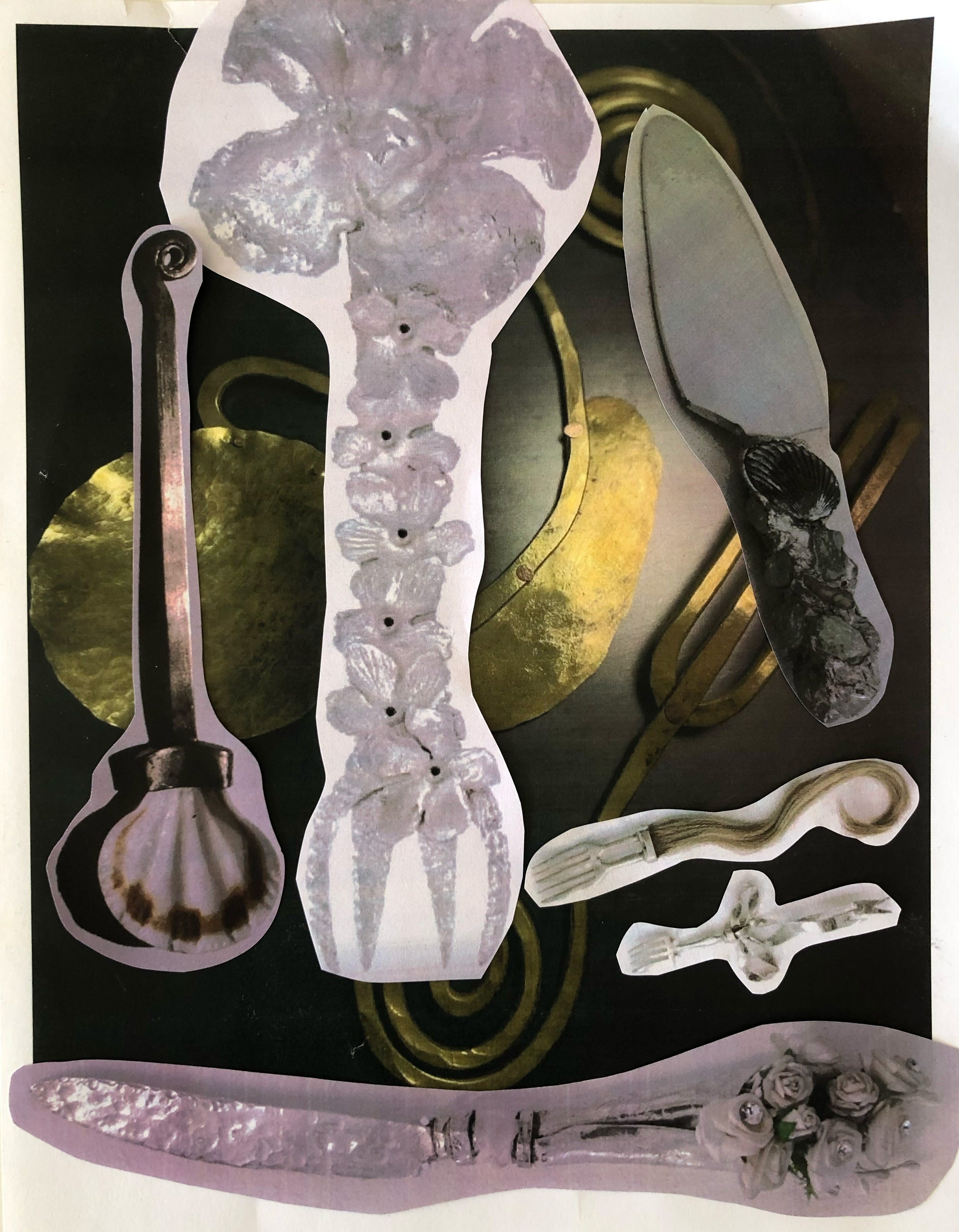
A little over a year ago, I encountered a handmade sterling silver olive fork that was as exquisite as it was delicate. Its handle was composed of a series of flowers, each with a bright red garnet the size of the head of a pin in their center, with one large blossom at the end. The tines were thin and slightly curved and didn’t look quite sharp enough to pierce anything. “Can you eat from these?” I asked the gallerist. The fork was part of an exhibition. “I mean, you can,” she replied. I took her inflection to mean that the fork plus the spoon, salt cellar, knives, and napkin rings in the series were meant to be appreciated visually more so than functionally.
Since then, I’ve noticed many artful utensils that are more spiritually aligned with jewelry than any semblance of user friendliness: forks with handles that look like thin bow-tied ribbons, spoons with seashells as their bowls; a knife composed of ball bearings (in a riff on the back of a Josef Hoffman chair); a cake knife encrusted in stones, shells, and gems; a hammered-brass serving set with spirals for handles. Similar language accompanies the statements by the artists who made them: they “transform mundane activities into joyful experiences,” they “transcend utility.”
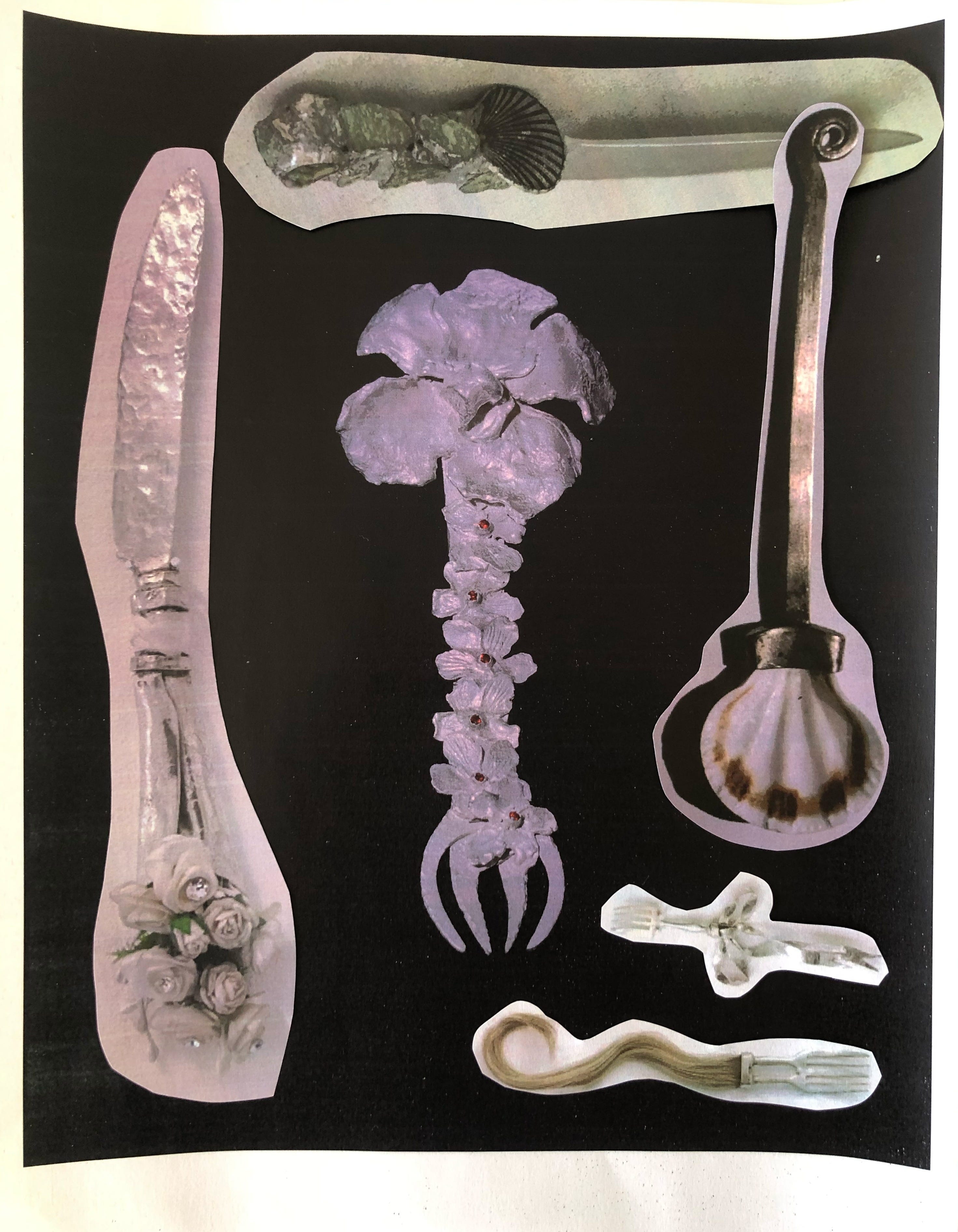
Sculptural tableware is nothing new, of course. The wisp of human hair in Australian artist Leo Costelloe’s Glamorous Dinner Date in Los Angeles (With My Baby) place setting from 2023 recalls the surrealist artist Méret Oppenheim’s famous Le Déjeuner en Fourrure, a cup, saucer, and spoon covered in fur from 1936. But the extremely precious, labor intensive items of today arrive at a time where eating feels more fraught—and obsessive—than ever. Humans eat for many reasons: for nourishment, for pleasure, to give us energy, to socialize. Yet the societal ritual of dining and its priorities are shifting just as artists are busily sculpting new, unapologetically unusable utensils.
A new category of appetite-suppressing drugs like Ozempic and GLP-1s has made certain foods, especially junk food, taste repulsive to the people who take them. “I miss enjoying food,” a person on an Ozempic subreddit commented. One in eight Americans have tried the medicine; one in three are interested in using it. This shift in eating has led big brands to reformulate their products to a changing market. Meanwhile, high-end restaurants are catering to customers with fat wallets and shrinking appetites by selling expensive “perfect bites” often made with decadent ingredients like caviar, truffles, and Wagyu beef. We’re also eating less in a more surreptitious way: scientists are finding that vegetables aren't as nutritious now as they were a century ago, due in part to climate change and extractive farming practices.
I looked up the olive fork as I was writing this, just to see how much it cost: $841. “A tangible embodiment of profound historical intrigue,” the product copy reads. When anthropologists in the future find this, will they wonder what someone ate from it?